
China | Japan | What’s New | Explore Global Celebrations | View Our Site Guide | Newsletter
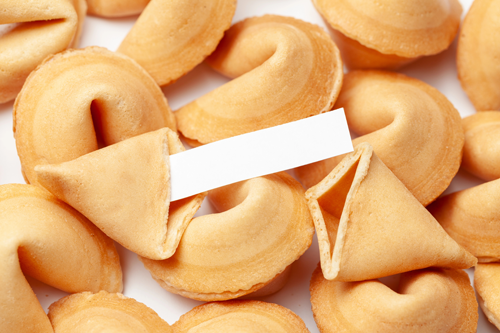
Fortune Cookies: The American Tradition at the End of a Chinese Meal
They arrive with the bill: folded cookies that crack open to reveal something more than sugar — a message, a moment, a mystery. Fortune cookies have become a beloved and expected end to many Chinese meals in the West, especially in the United States. But their story is anything but straightforward.
Despite their association with Chinese restaurants, fortune cookies are neither traditionally Chinese nor originally part of China’s culinary heritage. Their real origins lie in California — and their journey reflects a fascinating intersection of immigration, cultural adaptation, and culinary myth.
From Japan to California: The Cookie’s Surprising Roots
Fortune cookies likely originated in early 20th-century California, but not from Chinese kitchens. Instead, they trace back to Japanese-American bakeries in San Francisco and Los Angeles, where a similar folded cookie — with a paper message inside — was served at Japanese tea gardens. The cookie was modeled after *tsujiura senbei*, a traditional Japanese cracker containing fortunes, commonly found in Kyoto.
Several businesses have claimed to be the “original” inventor of the American fortune cookie. Among the most notable: Makoto Hagiwara, the Japanese caretaker of San Francisco’s Japanese Tea Garden, and David Jung, a Chinese immigrant who founded the Hong Kong Noodle Company in Los Angeles. The latter version gained prominence after WWII, when anti-Japanese sentiment forced many Japanese-American businesses to close and Chinese restaurateurs adopted the cookie as a novelty for their customers.
What’s inside the cookie is just as important as the crunch. Some fortunes echo traditional Chinese proverbs or cultural wisdom, while others offer generic encouragement, lottery numbers, or a playful surprise. Here are a few examples:
- 🥠 A journey of a thousand miles begins with a single step.
- 🥠 You will discover an unexpected treasure.
- 🥠 A soft voice may be heard over a loud shout.
- 🥠 Fortune favors the bold.
- 🥠 Every crisis is an opportunity in disguise.
Whether rooted in wisdom or whimsy, these messages reflect the fusion of East and West, seriousness and silliness, that defines the modern fortune cookie.
More Than Just Fun: Why Fortune Cookies Matter
While they may not be authentically Chinese, fortune cookies still serve an important cultural role. They reveal how traditions evolve, how identities are shaped, and how cultural symbols are reimagined in new contexts. What began as a Japanese custom became a Chinese-American restaurant ritual — and is now a widely recognized symbol of cross-cultural fusion.
For global professionals, they’re also a useful reminder: what people think is “Chinese” (or any culture, really) is often shaped by local history, migration, and marketing. Understanding the difference between perception and authenticity is a valuable form of cultural intelligence.
So the next time you crack open a fortune cookie, enjoy the fun — and the layers of meaning baked into that sweet, folded shell. Discover more cultural insights and global traditions here.
HOME | SERVICES | CULTURAL INTELLIGENCE | EXPLORE CULTURES | INSIGHTS | ABOUT | CONTACT
Email Us | www.culturalsavvy.com | ©1999–2025 Cultural Savvy. All Rights Reserved. Terms of Use